
PARTNERS
TEAM MEMBERS

Michael Pavlidis (Professor of “Biology–Physiology of Marine Organisms” at the Department of Biology, University of Crete)
Michael Pavlidis, Biologist, is a Professor of Biology–Physiology of Marine Organisms at the Department of Biology of the University of Crete. His current research focuses on the molecular, neuroendocrine, and environmental interactions involved in the regulation of the stress response in fish, as well as the development of reliable laboratory and operational welfare indicators for aquaculture fish species.
He has participated, as coordinator or principal investigator, in more than 30 European, transnational, and national research and development projects and networks, and has authored over 85 peer-reviewed scientific publications. He is the editor of the books “The Welfare of Fish” (Springer, 2020) and “Sparidae: Biology and Aquaculture of Gilthead Sea Bream and Other Species” (Wiley-Blackwell, 2011). He is also a co-author of the HAPO (Hellenic Aquaculture Producers Organization) study “Welfare of Mediterranean Fish: Best Practice Guide and Assessment Indicators” (2019).
He coordinates the international (Erasmus Plus) Master’s Programme “Aquaculture, Environment and Society – ACES+” and the annual summer school (FELASA certified) “Care and Use of Laboratory Animals: Mice, Rats, and Zebrafish.”
He serves as the national representative in the Strategic Working Group on Fish (SCAR – Fish; Standing Committee on Agricultural Research) since March 2017. Since September 2020, he has held the position of Vice-Rector for Research and Development at the University of Crete.
Antonios Angelakis (Assistant Professor in Technology and Innovation Policies, Department of Political Science, School of Social Sciences)
Antonios Angelakis is Assistant Professor at the Department of Political Science of the University of Crete in Technology and Innovation Policies, while his focus areas span innovation and technology policies; innovation sciences; innovation systems; technology transfer and innovation management; Intellectual Property Rights (IPRs) management and spin-offs; digital transformation, digital policies and AI; industrial and trade policies; emerging technologies (deep tech) and international political economy of technology. He has extensive professional experience as technology transfer officer in several Universities and innovation policy analyst in several business and research organisations. He serves as a member (since 2017) of the Attica Region Research and Innovation Council (PSEK) and he was a member of the high-level expert group ‘Fit for Future Platform’ (F4F) of the European Commission (2021-2024) for the simplification of EU laws. His publications include chapters in edited volumes, international conferences proceedings and papers in international peer reviewed journals. He is co-editor of the book: Aranitou, V. Manioudis, M. and Angelakis, A. (2025) The Economic Impact of Small and Medium-Sized Enterprises: Analytical Approaches to Growth and Innovation Challenges Amid Crises in Europe, Palgrave Macmillan.
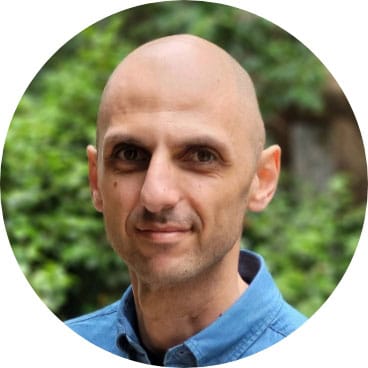
Antonios Angelakis (Assistant Professor in Technology and Innovation Policies, Department of Political Science, School of Social Sciences)
Antonios Angelakis is Assistant Professor at the Department of Political Science of the University of Crete in Technology and Innovation Policies, while his focus areas span innovation and technology policies; innovation sciences; innovation systems; technology transfer and innovation management; Intellectual Property Rights (IPRs) management and spin-offs; digital transformation, digital policies and AI; industrial and trade policies; emerging technologies (deep tech) and international political economy of technology. He has extensive professional experience as technology transfer officer in several Universities and innovation policy analyst in several business and research organisations. He serves as a member (since 2017) of the Attica Region Research and Innovation Council (PSEK) and he was a member of the high-level expert group ‘Fit for Future Platform’ (F4F) of the European Commission (2021-2024) for the simplification of EU laws. His publications include chapters in edited volumes, international conferences proceedings and papers in international peer reviewed journals. He is co-editor of the book: Aranitou, V. Manioudis, M. and Angelakis, A. (2025) The Economic Impact of Small and Medium-Sized Enterprises: Analytical Approaches to Growth and Innovation Challenges Amid Crises in Europe, Palgrave Macmillan.

Andreas Panagopoulos (Coordinator of the Technology Transfer Office at the University of Crete, Associate Professor in the Department of Economics at the University of Crete, and founder of the interdisciplinary research center TECHNIS)
Andreas Panagopoulos is the coordinator of the Technology Transfer Office (TTO) at the University of Crete, an Associate Professor in the Department of Economics at the University of Crete, and the founder of the interdisciplinary research center TECHNIS, which focuses on research in innovation and intellectual property.
He holds a PhD from University College London (UCL) and has taught at the University of Bristol, Lancaster University, and the European Political-Economy Infrastructure Consortium. He has also been an RTN fellow at the University of Toulouse and a visiting professor in the Department of Economics at KU Leuven, as well as in the Faculty of Law at the University of Oxford.
He employs tools from economics, management, and legal science to understand the forces driving innovation and patents, with a particular focus on Artificial Intelligence and the pharmaceutical industry. His research has been published in leading economics journals such as The Economic Journal, in management science journals like Academy of Management Perspectives and Academy of Management Best Papers and Proceedings, as well as in legal science journals such as Computer Law and Security Review and the Journal of Law and the Biosciences.
He has been twice awarded the American Academy of Management Best Paper Finalist Award, and has previously received funding from the UK’s Economic and Social Research Council (ESRC). Currently, both his research and his work at the TTO are funded through research grants from the Greek Ministry of Development and the Ministry of Education.
Nikos Poulakakis (Full Professor in the Department of Biology at the University of Crete and Director of the Natural History Museum of Crete)
Nikos Poulakakis is a Full Professor in the Department of Biology at the University of Crete and the Director of the Natural History Museum of Crete (NHMC). Since March 2021, he has also been an affiliated faculty member at the Institute of Molecular Biology and Biotechnology (IMBB) of the Foundation for Research and Technology – Hellas (FORTH), and the group leader of the Paleogenomics and Evolutionary Genetics (PEG) laboratory.
He studied Biology at the University of Crete (1997) and earned his Master’s degree from the Department of Geology at the University of Athens. He completed his PhD in 2005 in the Department of Biology at the University of Crete. He worked as a postdoctoral researcher first at NHMC (2005–2006) and then in the Department of Ecology and Evolutionary Biology at Yale University (2007–2009).
His research interests focus on molecular systematics, phylogeny, phylogeography, population genetics, and the conservation management of primarily animal species. The majority of his research is based on DNA sequence data from both extant and extinct species.
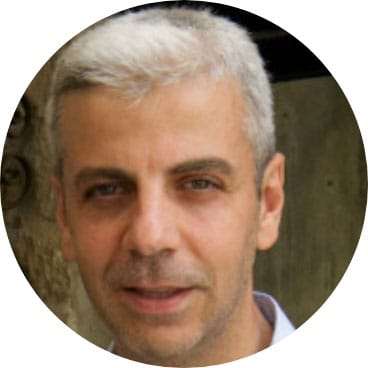
Nikos Poulakakis (Full Professor in the Department of Biology at the University of Crete and Director of the Natural History Museum of Crete)
Nikos Poulakakis is a Full Professor in the Department of Biology at the University of Crete and the Director of the Natural History Museum of Crete (NHMC). Since March 2021, he has also been an affiliated faculty member at the Institute of Molecular Biology and Biotechnology (IMBB) of the Foundation for Research and Technology – Hellas (FORTH), and the group leader of the Paleogenomics and Evolutionary Genetics (PEG) laboratory. He studied Biology at the University of Crete (1997) and earned his Master’s degree from the Department of Geology at the University of Athens. He completed his PhD in 2005 in the Department of Biology at the University of Crete. He worked as a postdoctoral researcher first at NHMC (2005–2006) and then in the Department of Ecology and Evolutionary Biology at Yale University (2007–2009). His research interests focus on molecular systematics, phylogeny, phylogeography, population genetics, and the conservation management of primarily animal species. The majority of his research is based on DNA sequence data from both extant and extinct species.
Iasmi Stathi (Education Advisor at the Natural History Museum of Crete, University of Crete, and member of the Laboratory Teaching Staff (E.DI.P.) at the School of Sciences and Engineering, University of Crete)
Iasmi Stathi, Biologist, is an Education Advisor at the Natural History Museum of Crete, University of Crete, and a member of the Laboratory Teaching Staff (E.DI.P.) at the School of Sciences and Engineering of the University of Crete. She earned her Master’s degree in 1998 from the Department of Biology at the University of Crete (specialising in Ecology), with her thesis titled: “Distribution of Scorpions in the Central and Eastern Mediterranean and Ecological Aspects of the Scorpions of Crete.”
In 2009, she completed her PhD dissertation entitled “Ecology and Phylogeography of the Scorpions of the Southern Aegean,” as part of the EPEAEK programme: “Management of Terrestrial and Marine Biological Resources,” at the Department of Biology, University of Crete.
Her research interests include Educational Research and Development, Environmental Education, as well as the Taxonomy, Ecology, and Phylogeography of scorpions (Arachnida: Scorpiones) in the Eastern Mediterranean.
Newsletter
Join our community by subscribing to our newsletter